
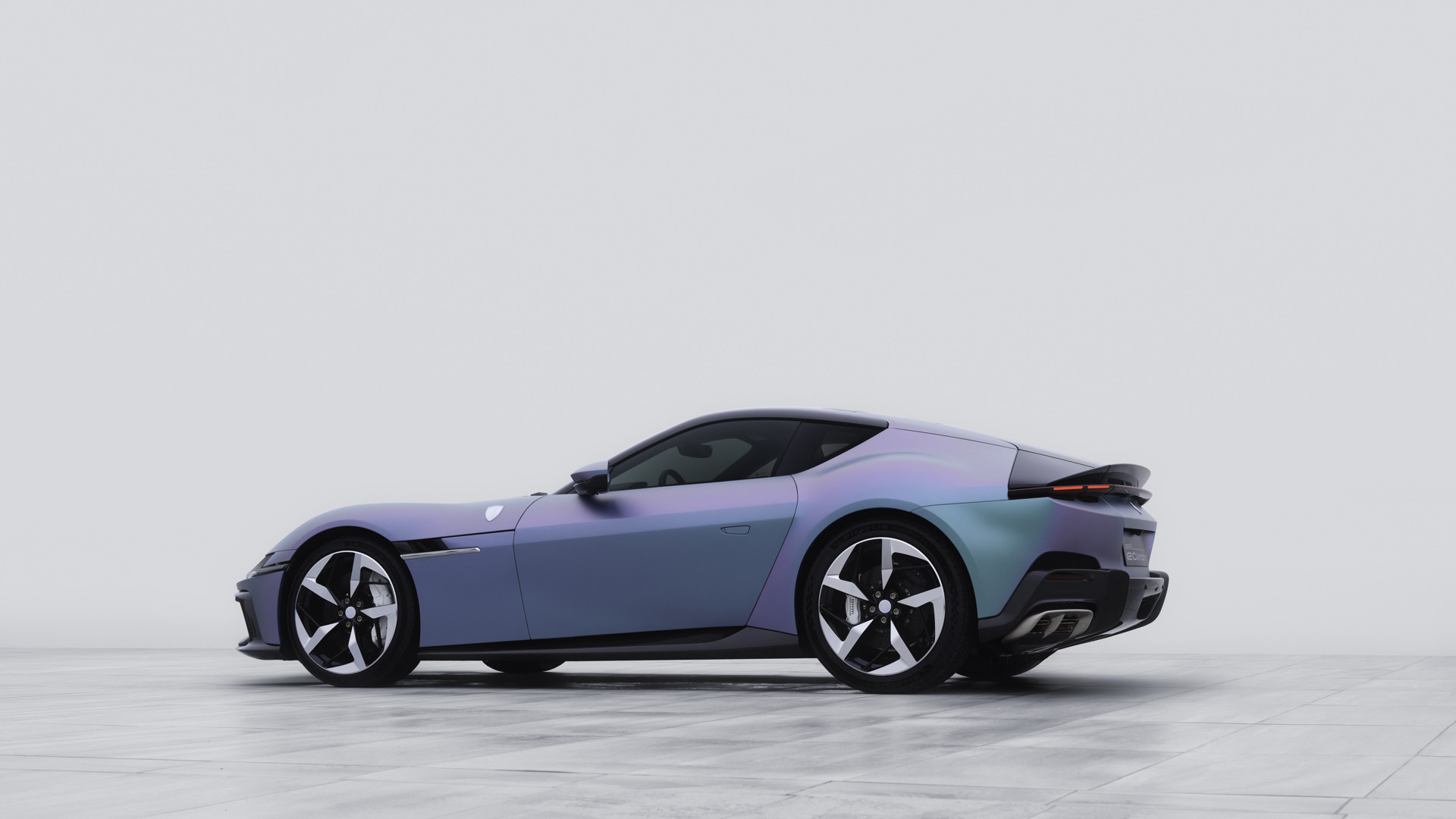
Ferrari’s decision to interpret its flagship V12 grand tourer through a Tailor-Made lens says less about excess and far more about intent. In an era where limited editions often arrive louder, wider and more performative, the 12Cilindri Tailor Made takes a quieter, more thoughtful route. It does not chase spectacle, nor does it attempt to rewrite Ferrari’s performance playbook. Instead, it explores something far more nuanced: how heritage engineering can coexist with contemporary culture, craft and personal narrative without losing its soul.
At its core, the Ferrari 12Cilindri remains a deeply traditional car by Maranello standards. A naturally aspirated 6.5-litre V12 sits up front, producing 830 cv and revving to an almost defiant 9,500 rpm. It is paired with an eight-speed dual-clutch transmission and delivers performance figures that comfortably place it among the fastest road-going grand tourers ever built. Yet numbers are not the point here. The 12Cilindri is engineered as a long-distance machine first — stable at speed, fluid through fast corners and surprisingly restrained when driven gently. It is a Ferrari that values composure as much as drama.
The Tailor-Made iteration does nothing to alter this mechanical brief, and that restraint is important. Ferrari has resisted the temptation to turn the car into a technical showcase or an engineering experiment. Instead, the transformation happens at a more human level — in surfaces, textures, materials and the ideas they represent. Developed over nearly two years, this one-off car was shaped through collaboration between Ferrari’s design team and a group of contemporary South Korean artists. Their influence is not applied as ornamentation but absorbed into the car’s identity, subtly reshaping how it is experienced.
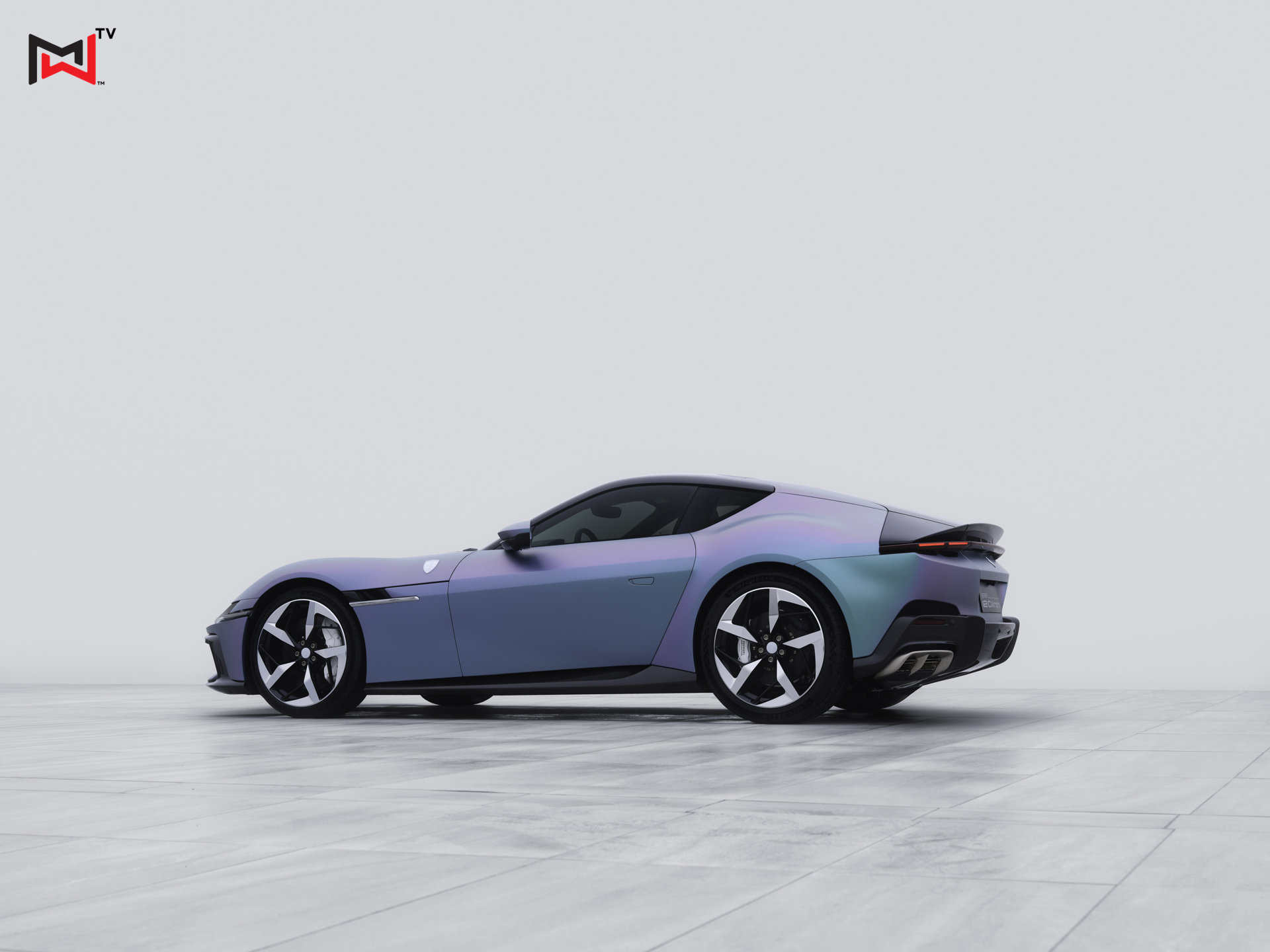
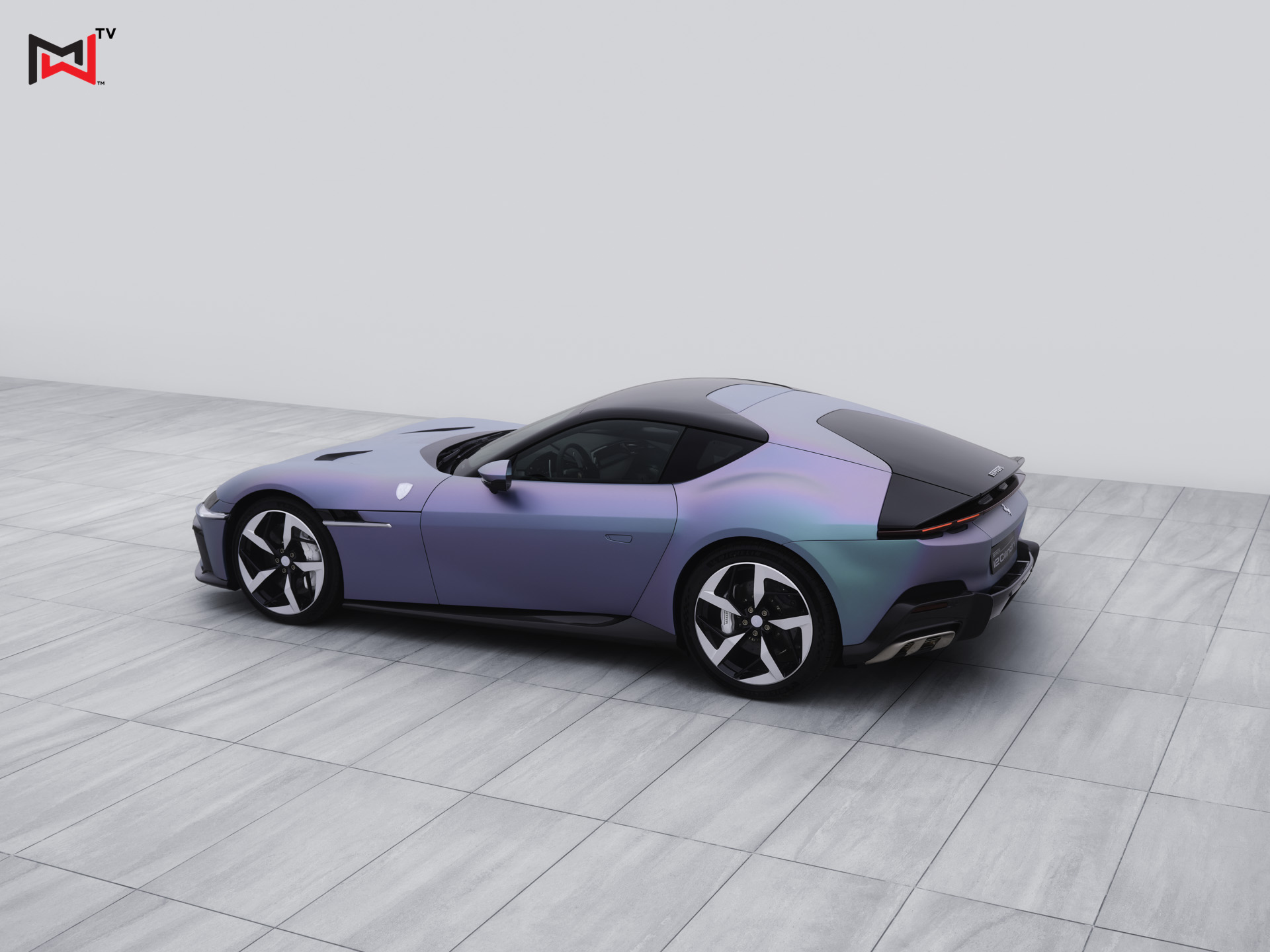
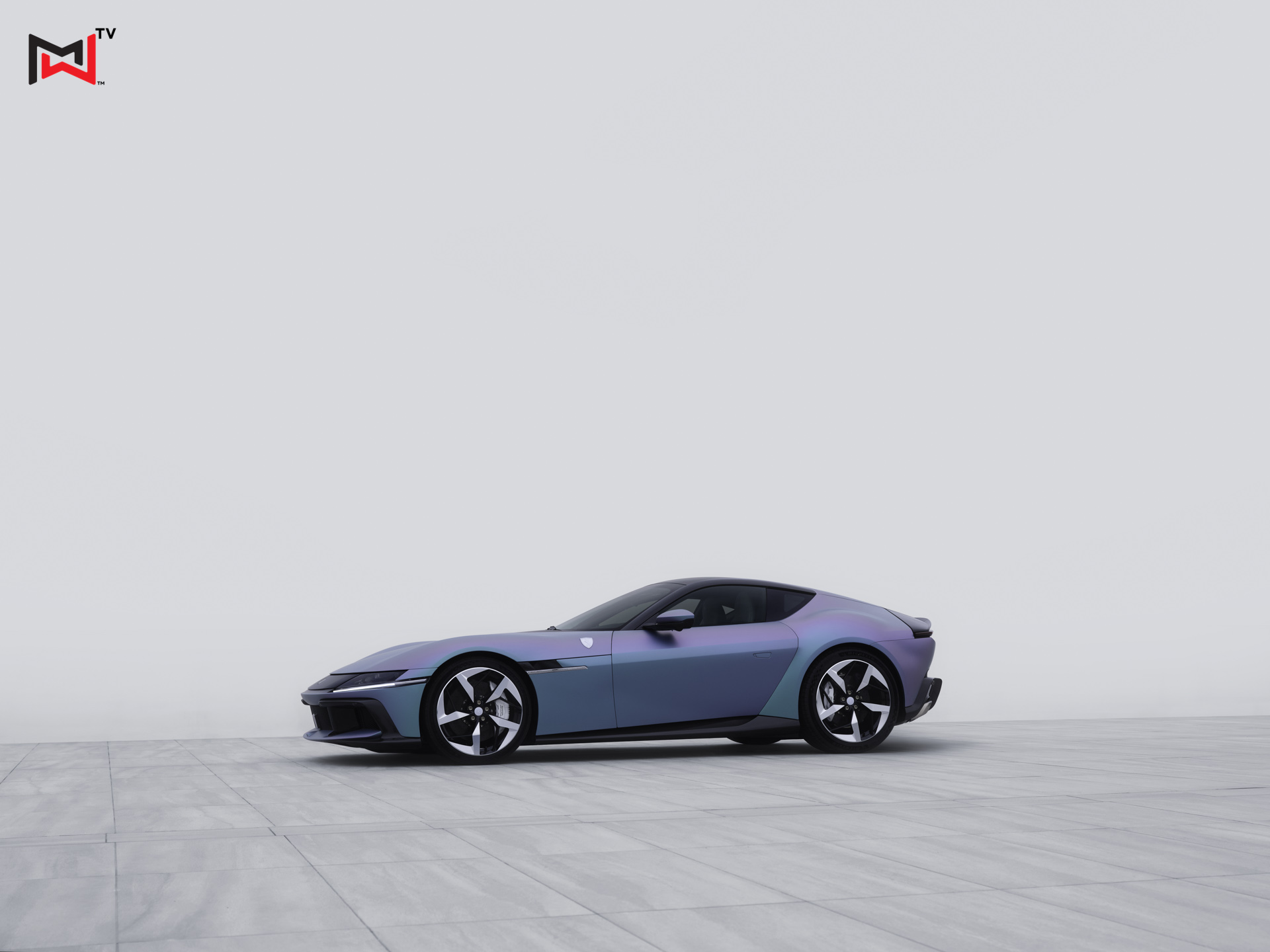
The exterior finish is a case in point. The paint, known as Yoonseul, draws inspiration from traditional Korean ceramics and the visual rhythm of modern Seoul. It is deliberately difficult to define. Depending on light and angle, it moves between green, blue and violet, lending the body a sense of motion even when stationary. Importantly, it does not fight the 12Cilindri’s design language. The proportions remain clean, the surfaces calm. The colour enhances the form rather than demanding attention from it — a decision that reflects maturity rather than bravado.
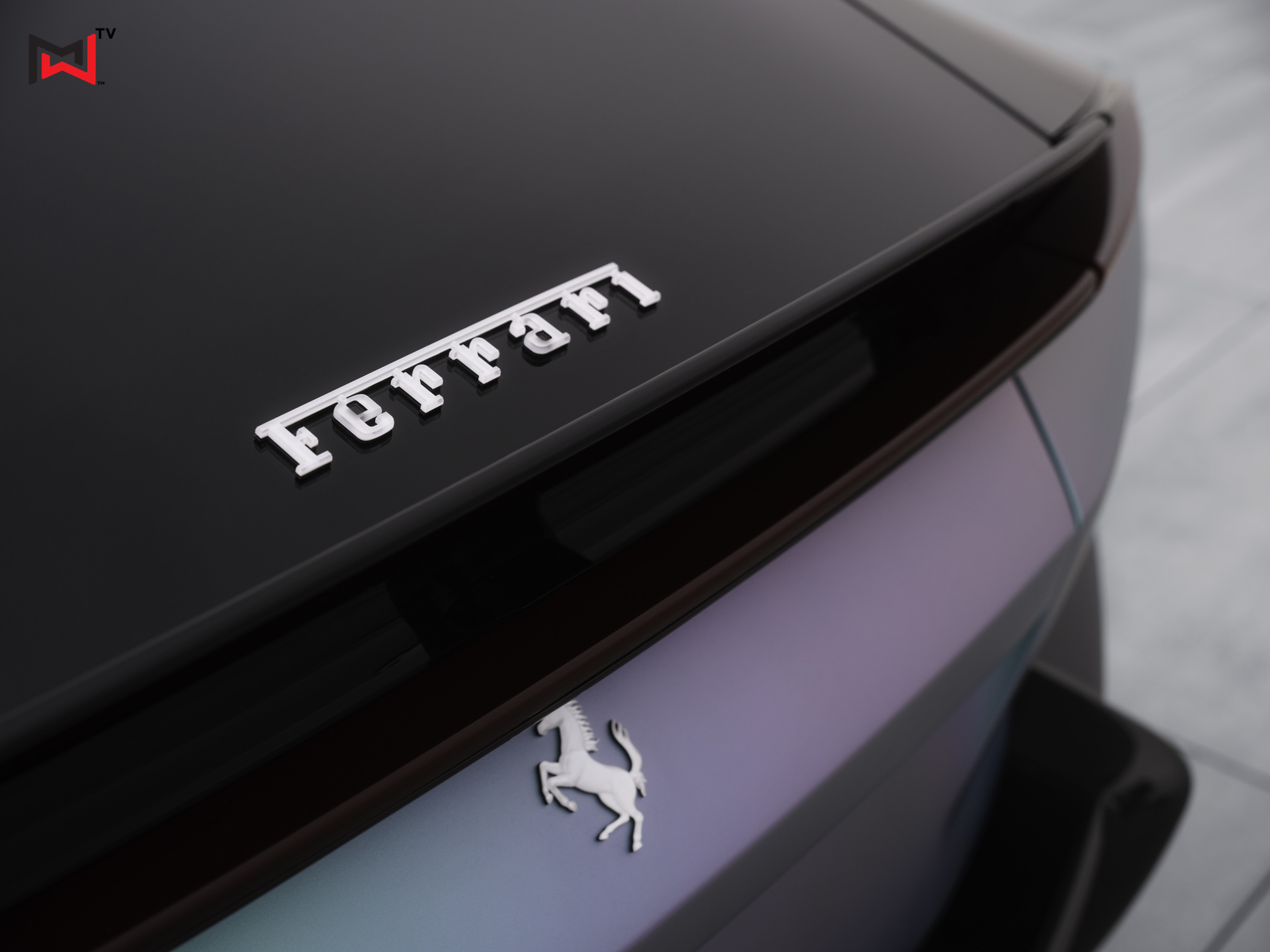
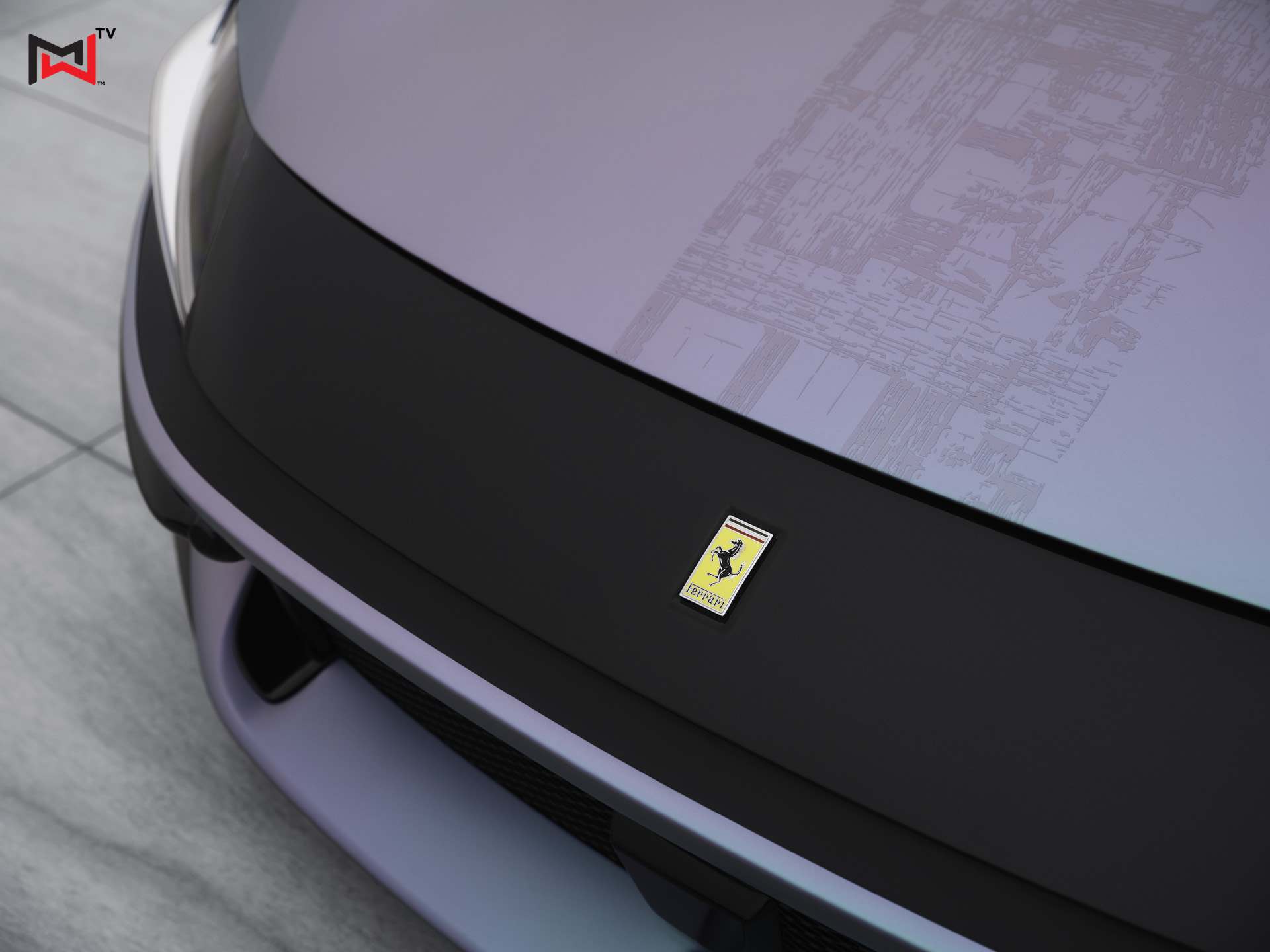
Ferrari’s most recognisable symbols have also been reinterpreted with care. The Prancing Horse, the Scuderia shields and the wheel centre caps appear in semi-transparent acrylic, creating depth rather than contrast. It is a subtle shift, but one that speaks volumes about confidence. When a brand is secure in its identity, it can afford to reinterpret its own iconography without fear of dilution.
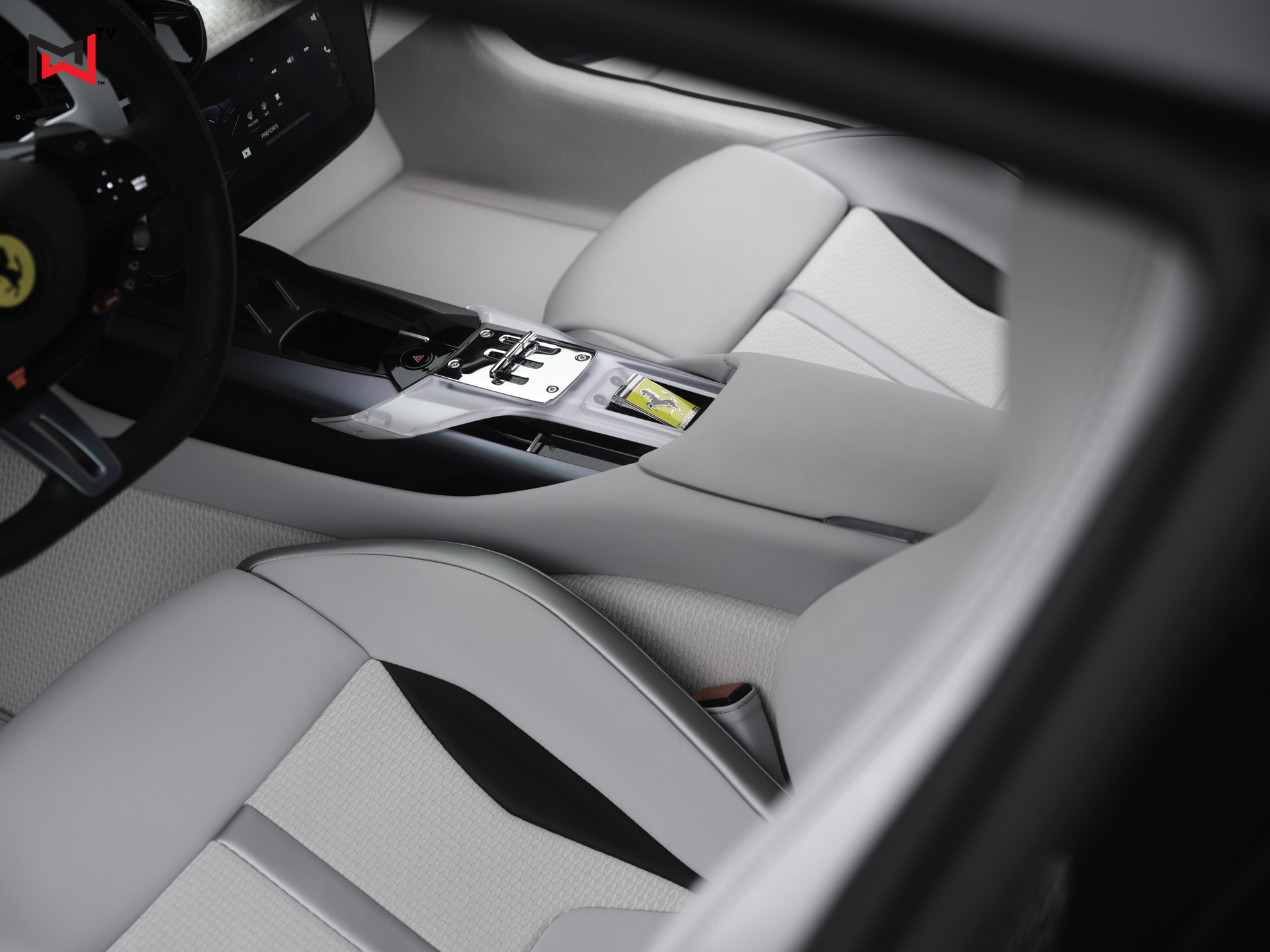
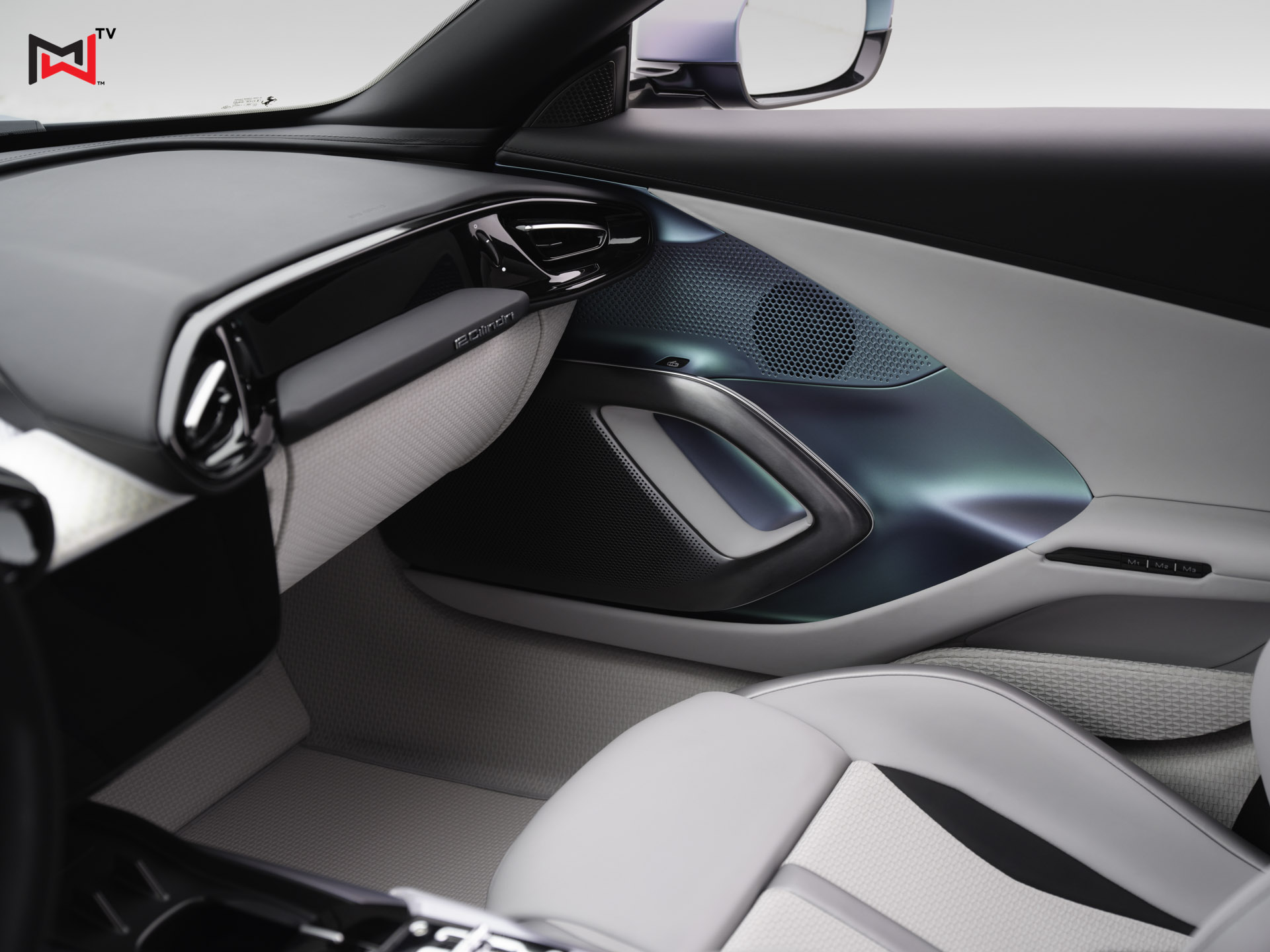
Inside, the cabin becomes the real focal point of the Tailor-Made concept. Traditional Korean horsehair weaving has been adapted into bespoke textile elements used across the interior, introducing a tactile quality rarely seen in modern performance cars. These surfaces are complemented by printed motifs on the glass roof, allowing light to filter into the cabin in soft, shifting patterns. The effect is immersive but restrained — the kind of detail you notice over time rather than all at once.
This approach mirrors what we often discuss when examining how luxury cars are actually built, not marketed. The emphasis on material honesty, craftsmanship and process over visual excess echoes themes we have explored earlier in our deep dive into behind-the-scenes at luxury car manufacturing, where elegance is often the result of countless small decisions rather than one dramatic gesture. The 12Cilindri Tailor Made feels very much like a product of that mindset.
Bespoke elements continue throughout the cabin, from a customised key to tailored luggage and discreet design references on functional components. Even the brake callipers and shift paddles carry subtle treatments that link back to traditional craft techniques. Yet nothing feels overworked. Ferrari’s familiar balance between motorsport minimalism and grand touring comfort remains intact, ensuring the driver’s focus stays where it should — on the road.
Crucially, the artistic direction does not soften the driving experience. The steering remains sharp, the chassis communicative, and the V12 engine continues to define the car’s emotional core. In a world steadily moving toward electrification, the linear response and unfiltered sound of a naturally aspirated twelve-cylinder feels almost anachronistic — and deliberately so. It aligns perfectly with the Tailor Made philosophy here: a celebration of analogue values in a digital age.
From an industry perspective, the 12Cilindri Tailor Made highlights how bespoke programmes are evolving at the very top of the luxury performance market. Exclusivity today is no longer just about limited production numbers or extreme specifications. It is increasingly about narrative, cultural relevance and the ability to create objects that resonate on a personal level. Ferrari has understood this shift without abandoning its foundations.
The 12Cilindri Tailor Made does not attempt to redefine what a Ferrari should be. Instead, it broadens the conversation around what a Ferrari can represent. It proves that performance, heritage and craftsmanship need not exist in isolation, and that collaboration — when handled with restraint — can add depth rather than distraction.
In the end, this car is less about making noise and more about making sense. It is a dialogue between past and present, between engineering discipline and creative expression. For those who understand Ferrari beyond lap times and horsepower figures, the 12Cilindri Tailor Made stands as a thoughtful reminder that the future of luxury performance may well lie in meaning, not magnitude.
Gallery







Your comment will be verified by admin before going live